
Swarms of immature pink locusts and adult yellow locusts are currrently active. Not only are fresh locusts swarms expected to arrive in the coming weeks, but even those already present in India have mated and are breeding new offspring.

he government is examining a plan of bank recapitalisation and considering an urban version of MNREGS.
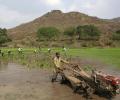
Much of the rural recovery story is based on the premise of agriculture doing well. Even if it clocks a growth of 2.5-3 per cent this year, it is still just around 15 per cent of the overall GDP. The non-farm sector, which constitutes a bigger portion of the overall rural economy, is now hampered by disruptions and lockdowns.
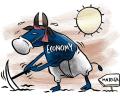
The plan could mature into either an umbrella programme for urban youths similar to the Garib Kalyan Rozgaar Abhiyaan or a modified urban-focused version of MGNREGS.

The met department said that rainfall in August is projected to be within the normal range at 97% of LPA. In August and September, India receives around 43 mm of rainfall.
However, demand was still much higher compared to the previous years, underlining the scheme's vital role in providing employment to the rural poor, a vast majority of whom are migrants.
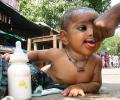
The demand for milk and milk products slumped during the Covid-19 lockdown mainly from hotels, restaurants, sweetmeat shops which were shut to control the spread of the disease.

Between June 1 and July 28, about 32 per cent of the 685 districts in the country did not receive adequate rainfall.
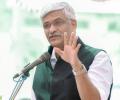
Court orders probe into Union minister Gajendra Singh Shekhawat's role in a complaint linked to Sanjivani Credit Cooperative Society, in which thousands of investors allegedly lost Rs 900 crore a year ago.
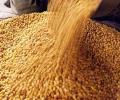
Distributing chana is easier than other varieties of pulses as it only requires cleaning and sorting and can be consumed whole; it was also abundantly available with Nafed.
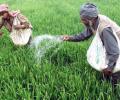
Kerala, Punjab, Telangana and Andhra Pradesh are among the major agriculturally important states that have banned the use of glyphosate citing its adverse impact on human health.
The thinking at the Centre is that since the RBI has ramped up purchases of government bonds, the interest earned on them will be transferred to the exchequer as dividend.
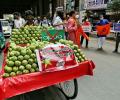
'We are not able to manufacture even low-end products as cheaply as China.' 'We are not buying Chinese goods today out of any love for China.'

The plan involves the Rajya Sabha and Lok Sabha seating half of their members in their respective chambers, reports Archis Mohan.
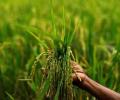
Data from department of agriculture showed that kharif crops had been sown in around 31.56 million hectares till Friday, which was 104.25 per cent more than the same period last year. Acreage of almost all crops was higher than last year.

Experts say while the increasing demand for a ban on Chinese goods might make for good optics, the reality is that India is still heavily dependent on that country in a wide range of industries like electronics, mobile devices, auto, pharma, telecom equipment, and fertilisers.

The trade deal, officials say, can lead to an effective trading bloc against the China-led Regional Comprehensive Economic Partnership.
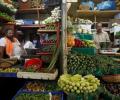
Since March 2020, WPI food inflation rate continued to fall but the CPI-food inflation rose, signaling a breakdown in supply chain from the mandis to the final household.

The firm, headed by Sunil Kumar Gupta, was appointed auditors of the PM's National Relief Fund in 2019, reports Archis Mohan

This includes an infrastructure push which may lead to the government spending more than its budgeted capital expenditure for 2020-21. There are also discussions on increasing the scope and quantum of direct cash transfers to the beneficiaries who need it the most.
 © 2026 Rediff.com - Advertise with us - Disclaimer - Privacy Policy - Sitemap - Feedback - About us - Terms of use - Grievances